April 28 marks 30 years since a gunman carried out one of the deadliest mass shootings in modern history at the Port Arthur Historic Site and surrounding areas, killing 35 people and injuring many others. The tragedy shocked Australia and became a defining moment that reshaped the nation’s approach to gun control.
In the aftermath of the massacre, sweeping reforms were introduced under then–Prime Minister John Howard. These measures included strict licensing requirements and a nationwide ban on automatic and semi-automatic firearms for civilians—laws that would later be recognized globally as among the most comprehensive and effective in reducing gun violence.
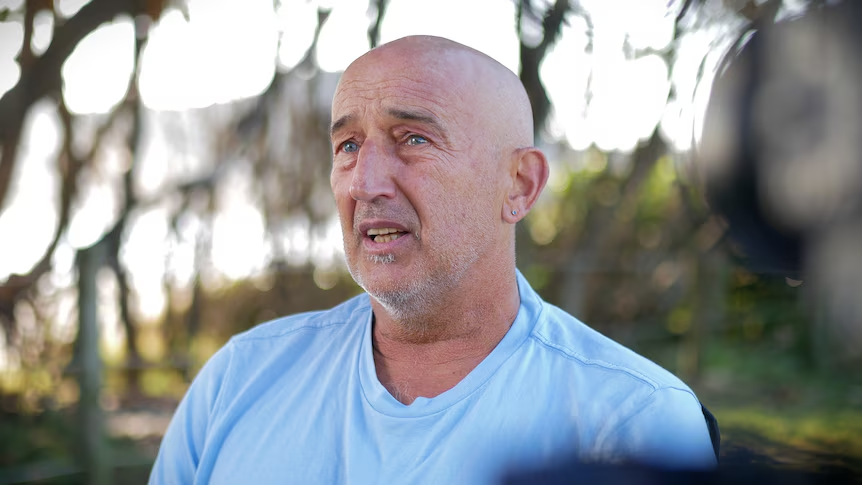
Among those most deeply affected was Walter Mikac, who lost his wife and two young daughters in the attack. Overcome with grief, shock, and anger, Mikac channeled his pain into advocacy. While traveling from Hobart to Melbourne for his family’s funeral, he wrote a heartfelt letter urging decisive action. In it, he appealed for strength and leadership to ensure that no other Australian family would have to endure such devastating loss.
Reflecting on the events of April 28, 1996, Mikac recalls being at a golf tournament when he first heard what he thought were distant sounds of a historical reenactment at Port Arthur. Tragically, those sounds were gunshots marking the beginning of an unfolding catastrophe. “It was the worst day of my life,” he later shared, a sentiment that continues to resonate three decades on.
Now, 30 years later, Mikac remains an outspoken advocate for gun safety. Recent events, including the Bondi Junction attack, have reignited national conversations about public safety and firearm regulations. While some reforms have been proposed, Mikac has criticized the response in certain jurisdictions as insufficient, stressing that complacency could undermine decades of progress.
The anniversary serves as both a moment of remembrance and a call to vigilance. The legacy of those lost at Port Arthur continues to shape Australia’s policies and its collective commitment to preventing similar tragedies. For Mikac and many others, honoring that legacy means ensuring that the lessons learned are never forgotten, and that meaningful action continues to protect future generations.